
TL;DR
- A full roof replacement includes much more than installing new shingles.
- The old roofing materials are removed so the roof decking can be inspected.
- New underlayment, flashing, drip edge, shingles, and ridge caps may be installed.
- Ice and water protection is often added to roof areas that are more likely to leak.
- Roof ventilation should be checked during the roof replacement process.
- Damaged decking or structural repairs may cost extra if they are found after tear-off.
- A written estimate should clearly explain what is included in a roof replacement.
Getting a new roof is a big project. Most homeowners only go through the process once or twice, so it is normal to have questions before signing a contract. One of the most common is simple: what is included in a roof replacement? The answer depends on your home, the condition of your existing roof, and the roofing contractor you hire. A quality roof replacement is much more than installing new shingles. Several different roof replacement materials work together to protect your home from rain, snow, wind, hail, and the changing weather we see across Colorado. Here is what you should expect.
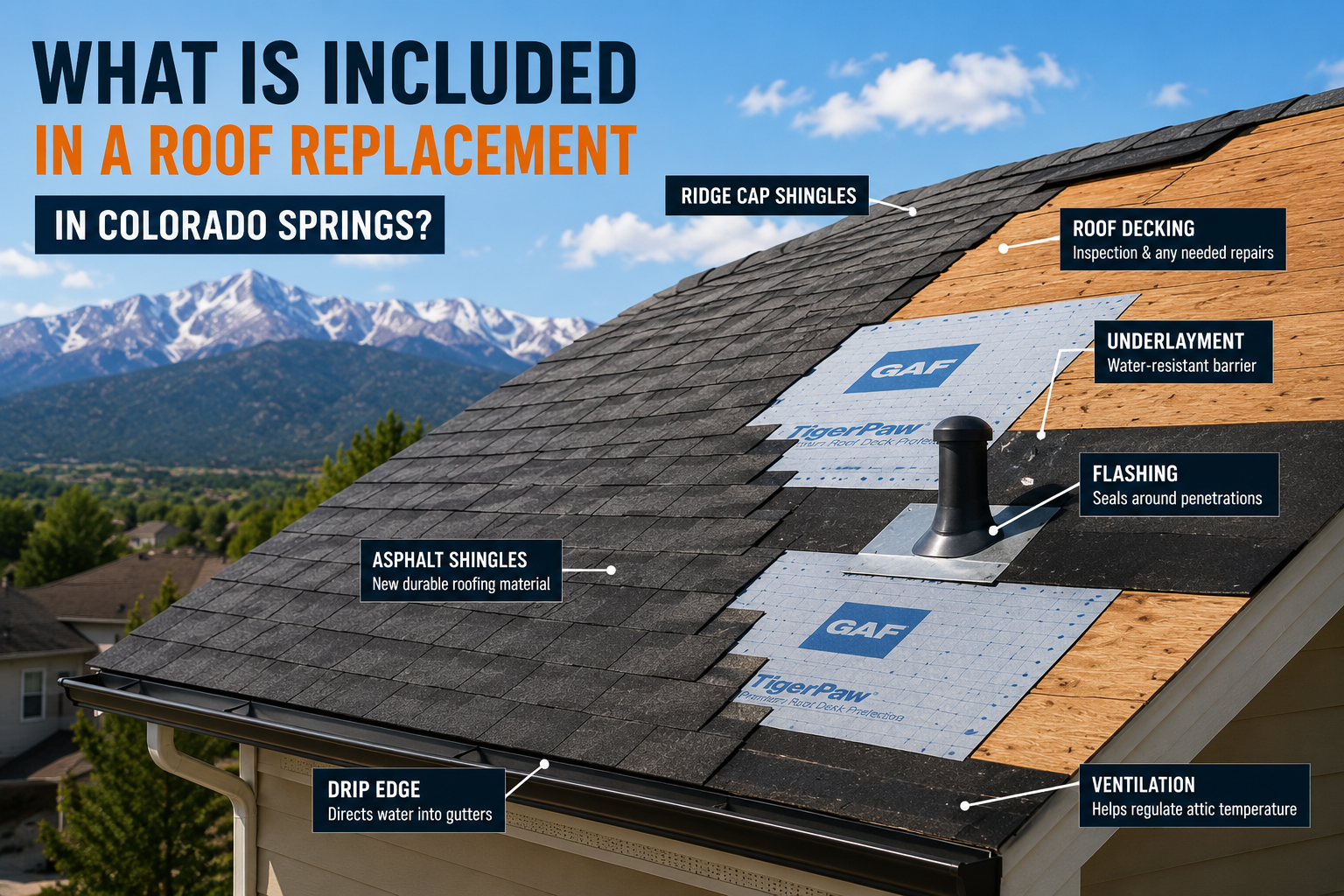
Removing the Existing Roof
Everything starts here. The old shingles are removed so the roof decking underneath can be inspected. Roofing over old shingles may save time, but it also hides problems that could shorten the life of the new roof. Removing the old materials allows your contractor to start with a clean surface and see exactly what condition the roof is in before installing anything new.
Inspecting the Roof Deck
Once the shingles are gone, the wood decking is checked carefully. If any sections have water damage, rot, or feel soft underfoot, those areas should be replaced before moving forward. Installing new roofing materials over damaged decking only creates bigger problems later. If you are unsure whether your roof has hidden damage, schedule a professional roof inspection in Colorado Springs. A roofer can check the shingles, decking, flashing, vents, and other areas before recommending repairs or replacement. A roof is only as strong as what is underneath it.
Installing New Underlayment
The next layer is not something you will ever see. It sits beneath the shingles and helps protect the home if wind-driven rain or melting snow works its way past the outer roofing materials. Many contractors now install synthetic underlayment because it stands up better to moisture and tearing than older felt paper. Although it is hidden once the project is complete, it does an important job every day.
Ice and Water Protection
Some parts of a roof need extra protection. Areas around valleys, roof edges, chimneys, and other places where water naturally collects often receive a waterproof membrane before shingles are installed. This extra barrier helps reduce the chance of leaks in the most vulnerable spots. Homes in Colorado can benefit from this added protection during winter weather.
Drip Edge Installation
Metal drip edge is installed along the edges of the roof. Its job is simple. It directs water toward the gutters instead of allowing it to run behind the fascia or into the roof decking. It also gives the roof a cleaner finished appearance. Older homes do not always have drip edge installed correctly, if at all.
Flashing Around Roof Features
Every roof has areas where shingles stop. Chimneys, plumbing vents, skylights, dormers, and sidewalls all require flashing to help keep water out. During the roof replacement process, flashing is inspected and replaced whenever necessary so these areas continue to perform the way they should. Leaks often begin where flashing has failed. If you have already noticed water entering your home, schedule a residential roof inspection or repair before the damage spreads.
New Asphalt Shingles
This is the part everyone notices. Once the roof is prepared, the asphalt shingles are installed according to the manufacturer’s installation requirements. Homeowners often choose architectural asphalt shingles because they offer an attractive appearance along with long-term durability. If your current roof is worn, leaking, or nearing the end of its usable life, learn more about Cheyenne Mountain Roofing’s residential roof replacement services in Colorado Springs. Color, style, and warranty options vary depending on the product selected.
What Is Included in an Asphalt Roof Replacement?
If you are asking what is included in an asphalt roof replacement, the shingles are only one part of the job. A complete asphalt roofing system may include underlayment, starter shingles, flashing, drip edge, waterproof membrane, field shingles, ridge cap shingles, ventilation components, and roofing nails. Not every estimate includes the same products. Before approving the work, ask the contractor to list the exact brand, product line, and type of roof replacement materials being installed.
Ridge Cap Shingles
The highest points of the roof need different shingles. Special ridge cap shingles are designed for roof peaks and hips. They help seal these areas while creating a finished appearance that matches the rest of the roof. Using products made specifically for this purpose generally provides better performance than cutting standard shingles.
Roof Ventilation
Ventilation matters more than many people realize. A properly ventilated attic allows heat and moisture to escape instead of becoming trapped beneath the roof. During the roof replacement process, your contractor may recommend improvements if the current ventilation system is not working as intended. Good airflow can help extend the life of many roof replacement materials. Ventilation problems are often found during a residential roof inspection, especially in older homes or homes that have had several layers of roofing work completed over the years.
Cleanup and Debris Removal
The work is not finished when the last shingle goes on. Old roofing materials should be removed from the property, dumpsters hauled away, and the yard cleaned thoroughly. Professional roofing crews also perform a magnetic sweep around the home to collect loose roofing nails from the lawn, driveway, and landscaping. Nobody wants to find nails weeks later.
Roofing Warranties
Most roof replacements include two different warranties. One comes from the manufacturer and covers the roofing products themselves. The other covers the contractor’s workmanship. Before work begins, ask what each warranty includes and how long the coverage lasts. Knowing this ahead of time can prevent confusion later.
What May Not Be Included in a Roof Replacement?
Not every roof needs the same repairs. Sometimes additional work is not discovered until the old roof has been removed. If damaged decking, structural repairs, gutter replacement, skylight work, or ventilation upgrades are needed, those items may be priced separately depending on the original agreement. Possible additional costs may include:
- Damaged plywood or OSB decking
- Broken or weakened rafters
- Chimney repairs
- Skylight replacement
- Gutter or fascia repairs
- Added attic ventilation
A detailed estimate should explain what is included and identify any situations that could require additional work. If the issue is limited to one area, a professional roof repair may be enough instead of replacing the entire roof.
Questions to Ask Before Replacing Your Roof
Do not judge an estimate by price alone. Ask the roofing contractor to explain:
- Which materials are included
- Whether the old roof will be removed
- How damaged decking is priced
- Whether flashing will be replaced
- How ventilation will be handled
- What cleanup is included
- Which warranties apply
These questions make it easier to compare estimates and spot missing work before the project begins.
Choosing the Right Roofing Contractor in Colorado Spring
Understanding what is included in a roof replacement makes it much easier to compare estimates from different roofing companies. Instead of looking only at price, take time to see which roof replacement materials are being installed, what warranties are offered, and whether cleanup, flashing, ventilation, and decking inspections are part of the project.
If you are considering a new roof in Colorado Springs or the surrounding area, Cheyenne Mountain Roofing can inspect your home, explain the roof replacement process, and recommend whether roof repairs or a complete residential roof replacement is the better option.
You can also learn more about the company, its experience, and its approach to local roofing projects on the Cheyenne Mountain Roofing About Us page.
Call Cheyenne Mountain Roofing at (719) 322-4659 to schedule a roof inspection in Colorado Springs or request an estimate.

Cheyenne Mountain Roofing Free Estimate
Google Review of Cheyenne Mountain Roofing
We had a great experience with Cheyenne Mountain Roofing. I called regarding a leaky skylight and they quickly came out and let us know what the issue was. They explained everything thoroughly and even came back after a hail storm to recheck the roof. Juan arrived on time to fix the skylight and even removed some leaves from our gutters. We’ll be using them again for any roofing needs.
Tabitha Curell on Google (see our Google reviews here) ⭐⭐⭐⭐⭐